



Your home’s energy costs can be significantly reduced by selecting the right hot water system. Many Australian homeowners are switching to heat pump systems for increased efficiency and long-term cost savings due to rising electricity prices. This Heat Pump Buying Guide describes how heat pumps operate, which models are the most affordable for Australian households, and what features to compare before making a purchase.
But remember, picking the right system isn’t just about finding the cheapest option out there. You’ll want to consider tank capacity, warranty coverage, noise levels, operating efficiency, smart features, installation quality, and brand reliability. In this comprehensive Heat Pump Buying Guide, we’ll compare popular brands, break down key features, and help you find the perfect system for your home.
How does the Heat Pump Hot Water System work?
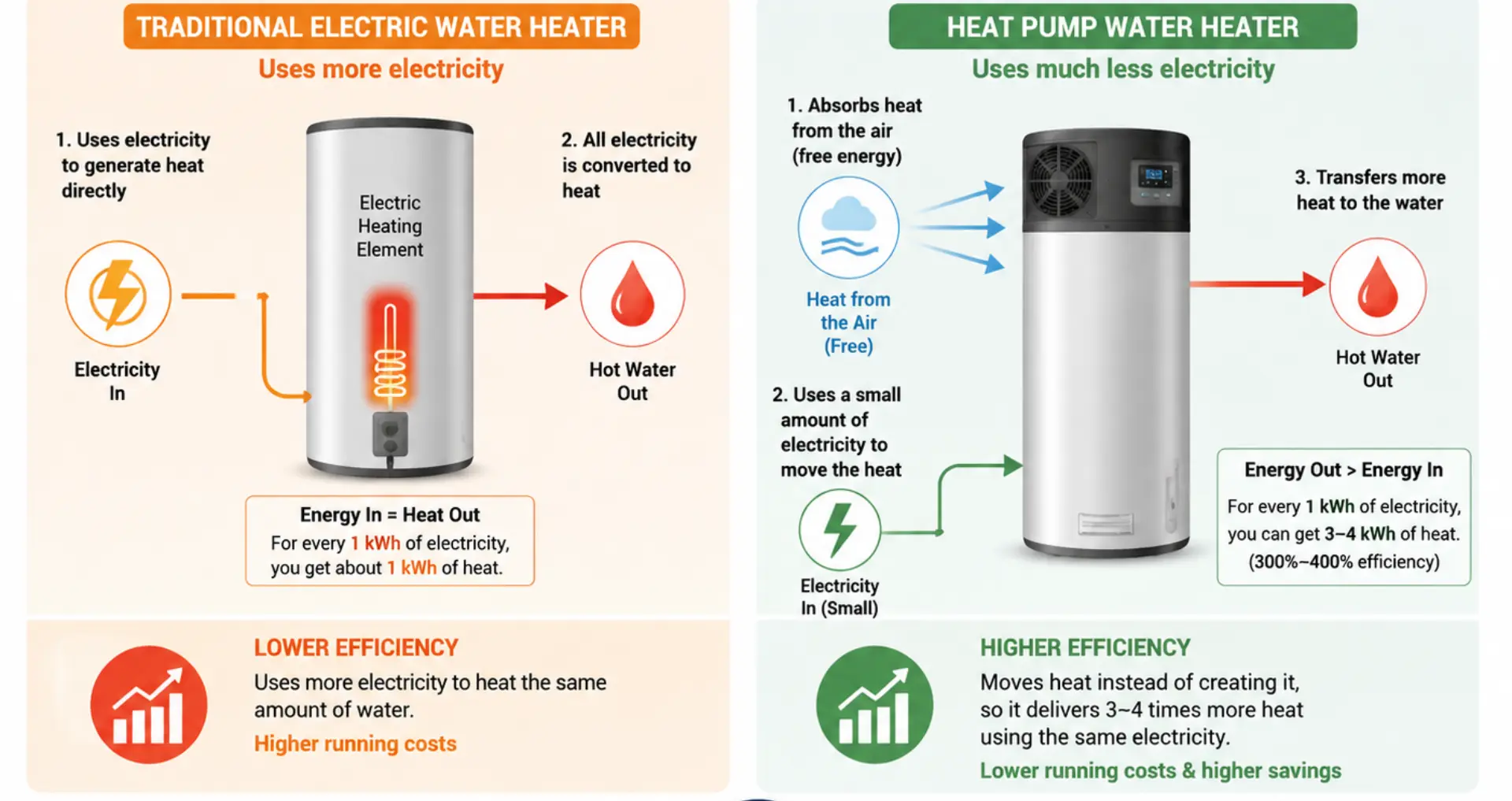
A heat pump hot water system operates a bit like an air conditioner in reverse. Instead of generating heat directly, it pulls warmth from the surrounding air and transfers that heat into the water stored in the tank. Thanks to this clever technology, heat pumps can use up to 60–80% less electricity than traditional electric water heaters.
This image will show you how heat pumps save electricity more effectively than traditional heaters. Also, you will have a clear concept about the difference between the configurations and functions of water heaters and heat pumps.
So, if you still have not installed the system but are planning to look forward to purchasing one, our heat pump buying guide will help you to get the best one for you.
For Australian households, this translates to lower power bills, a smaller environmental footprint, and better long-term savings. Plus, many modern heat pumps qualify for federal and state rebate programs, which can really help cut down those upfront installation costs.
Why More Australians Are Switching to Heat Pumps?
- Reduced greenhouse gas emissions
- Eligibility for government rebates and incentives
- Energy-efficient operation even in cooler climates
- Smart controls and Wi-Fi monitoring in modern systems
- Long-term cost savings compared to electric storage systems
How to Choose the Right Heat Pump
Tank Capacity
Picking the right tank size is crucial. For a small household of 1–2 people, a 200L system might do the trick, while larger families usually find that 270L–320L systems work best. If you go for a tank that’s too small, you might end up running out of hot water when you need it most.
Energy Efficiency
Keep an eye out for systems with high Coefficient of Performance (COP) ratings. A higher COP typically means better efficiency and lower energy bills. Many top-notch heat pumps now come with inverter technology that boosts energy performance.
Warranty Coverage
A longer warranty often reflects the manufacturer’s confidence in their product. Be sure to compare the tank warranty, compressor warranty, and labor coverage before making a purchase.
Noise Levels
Today’s heat pumps are much quieter than their older counterparts. If you’re installing one near bedrooms or close to neighbors, opting for a low-noise model is definitely a smart move.
Smart Features
Some of the latest systems come with Wi-Fi control, mobile apps, programmable schedules, and energy monitoring features. These tools can help homeowners make the most of their energy usage.
Top Heat Pump Brands in Australia
There are several brands making waves in the Australian market. Below, you’ll find a comparison table showcasing popular heat pump brands, including those featured in your company portfolio image.
| Brand | Typical Capacity | Estimated Price Range (AUD) | Warranty | Smart Features | Best For |
| Ecogenica | 215L–290L | $1,900–$3,500 | Up to 7 years | Energy-efficient operation | Budget-friendly efficient homes |
| Emerald Energy | 220L–320L | $3,200–$5,200 | 5–10 years | Wi-Fi app control | Families wanting premium features |
| Dux | 250L–300L | $3,000–$4,800 | Up to 7 years | Reliable heating performance | Long-term durability |
| Rheem | 270L–325L | $3,500–$5,500 | Up to 10 years | Advanced energy optimisation | Large family homes |
| iStore | 180L–270L | $3,000–$5,000 | 5–7 years | Smart scheduling | Solar-integrated households |
Here is a graphical presentation of the comparisons between brands of heat pumps for visual understanding, so that you can easily decide to select a brand of heat pumps.
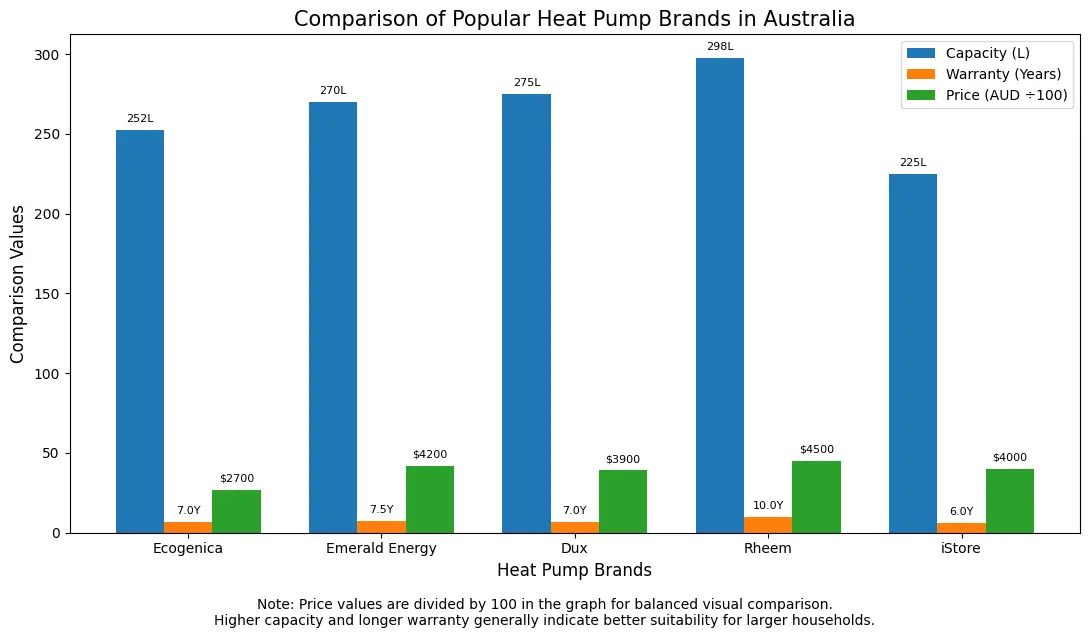
From the table and the chart of comparisons between features or aspects, it is clear that, among the brands, Rheem stands out with the highest average capacity and one of the longest warranty periods, making it a suitable option for larger families looking for long-term performance. Ecogenica appears to be a more budget-friendly solution for households wanting energy-efficient hot water systems without a higher upfront investment.
Meanwhile, Emerald Energy and Dux offer a balanced combination of performance, durability, and smart features, while iStore is often preferred for solar-integrated homes due to its smart scheduling capability. Overall, the comparison highlights how each brand serves different household needs, also to guide buying heat pump systems that match both their budget and lifestyle requirements.
Ecogenica Heat Pumps
Ecogenica is making waves in Australia, thanks to its budget-friendly pricing and energy-efficient performance. The brand is all about helping households shift towards sustainable living without the burden of hefty upfront costs. Homeowners are really drawn to Ecogenica systems for their practical design, solid warranties, and eligibility for rebates.
One of the standout features of Ecogenica systems is their incredible value for money. They’re often seen as a great starting point for homeowners eager to ditch pricey electric storage systems while still enjoying reliable hot water performance.
Emerald Energy Heat Pumps
Emerald Energy is quickly becoming a favorite in the Australian market by blending smart technology with efficient hot water solutions. Their all-in-one systems come in various sizes, including 220L, 270L, and 320L, making them a perfect fit for households of all sizes.
A key perk of Emerald systems is the Wi-Fi connectivity and app control they offer. Homeowners can easily keep an eye on their usage, set heating schedules, and manage energy consumption more effectively. Plus, Emerald systems boast sleek, modern designs and inverter-based technology that enhances efficiency while keeping operational costs down.
Dux Heat Pumps System
Dux is a household name in the Australian hot water scene. The company has earned a reputation for reliability, durability, and consistent after-sales support. Many homeowners opt for Dux heat pumps because they trust this well-established Australian brand.
Dux systems are designed for dependable daily operation and a steady hot water supply for families. They also adapt well to Australian climate conditions, making them a reliable choice for long-term use.
When it comes to buying a heat pump, there are a few common pitfalls you’ll want to steer clear of
- Going for the cheapest option without considering efficiency ratings
- Overlooking warranty details and labor coverage
- Choosing the wrong tank size for your household’s needs
- Installing the unit in a spot with poor ventilation
- Forgetting to check if you qualify for government rebates
Final Thoughts
This heat pump buying guide highlights that modern heat pump systems are no longer just an alternative; they’re quickly becoming the go-to hot water solution for many Australian homes. With benefits like lower energy bills, government rebates, and eco-friendly performance, heat pumps are a smart investment for the long haul.
Brands such as Ecogenica, Emerald Energy, and Dux each bring something unique to the table, depending on your budget, household size, and desired features. Whether you’re looking for affordability, smart technology, or long-lasting reliability, picking the right system can greatly enhance your home’s energy efficiency and cut down on ongoing costs.
Before you make your final choice, be sure to compare installation quality, warranty coverage, and operating efficiency rather than just zeroing in on the initial price. A well-chosen heat pump system can deliver years of reliable hot water while helping you save money each month.