


Choosing the right air conditioner is no longer just about cooling a room. With rising electricity prices across Australia, homeowners are now focusing on energy efficiency, smart technology, long-term durability, and year-round comfort before purchasing an AC system. Whether you are upgrading an older unit or installing a new system for your home, understanding the important features can help you avoid expensive mistakes.
This Air Conditioner Buying Guide explains the most important factors to consider before buying an air conditioner. From inverter technology and energy star ratings to cooling capacity and smart features, this guide will help Australian homeowners choose the ideal system according to their budget and household needs.
Why More Australians Are Switching to Modern Air Conditioners
- Lower electricity consumption with inverter technology
- Improved cooling performance during Australian summers
- Reverse-cycle heating for winter comfort
- Better air filtration and humidity control
- Wi‑Fi smart controls and mobile app integration
- Long-term savings on electricity bills
How to Choose the Right Air Conditioner
1. Cooling Capacity
Choosing the correct cooling capacity is extremely important. A small bedroom may only require a 2.5kW system, while larger living rooms or open-plan spaces often need 5kW–8kW systems. Purchasing an undersized unit can lead to poor cooling performance and higher electricity usage.
2. Inverter Technology
Modern inverter air conditioners automatically adjust compressor speed according to room temperature. This helps maintain stable cooling while reducing energy consumption and operating noise. Inverter systems are now considered the most energy-efficient choice for Australian households.
3. Energy Star Ratings
Always compare Energy Star ratings before purchasing an AC unit. Higher star ratings generally indicate better energy efficiency and lower running costs over time.
4. Noise Levels
Quiet operation is important, especially for bedrooms and apartments. Many premium AC systems now operate with very low indoor noise levels for improved comfort.
5. Smart Features
Wi‑Fi connectivity, mobile apps, programmable timers and voice assistant compatibility have become increasingly common in modern AC systems. These features help homeowners manage energy usage more effectively.
Top Air Conditioner Brands in Australia
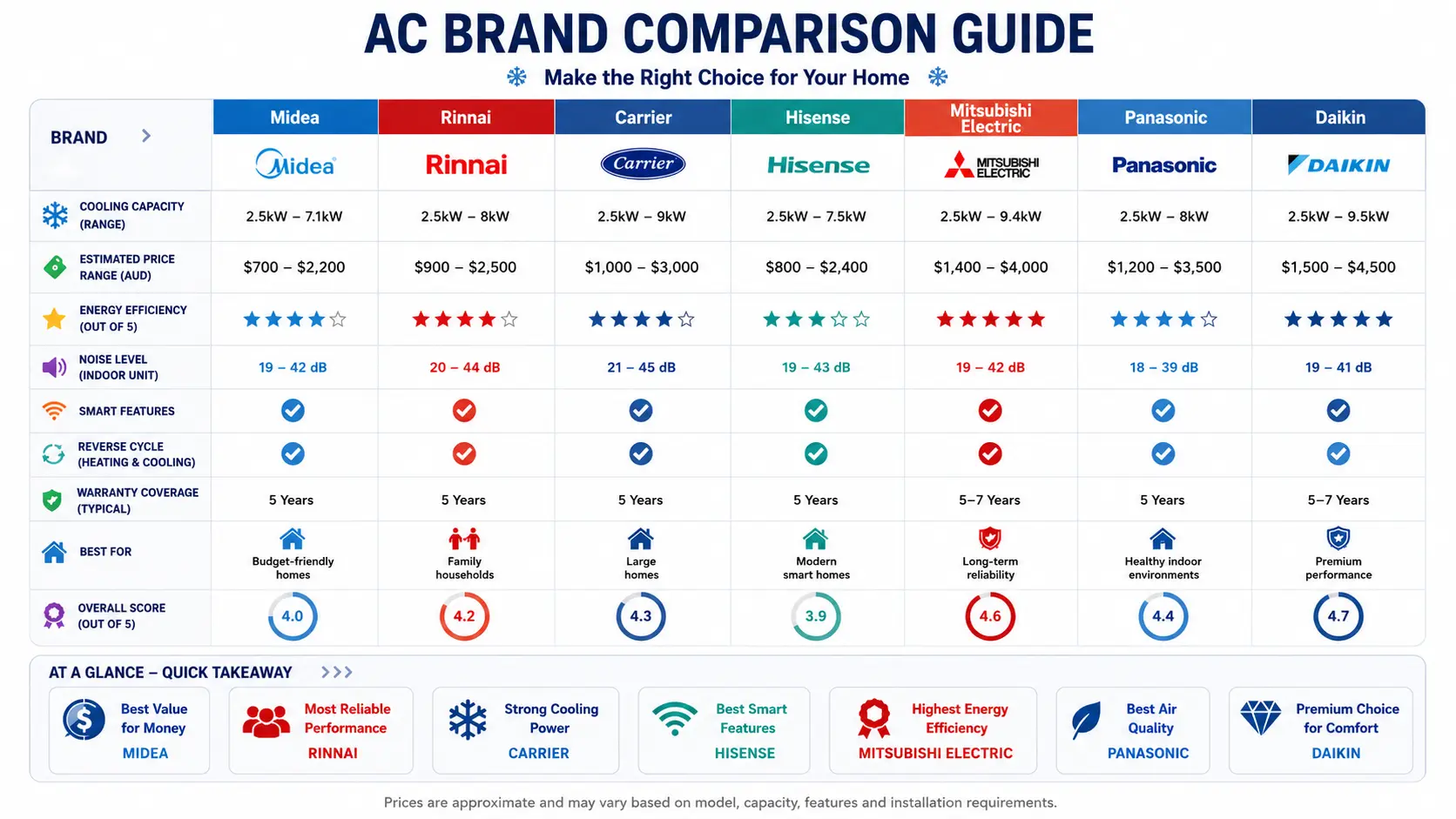
| Brand | Popular Capacity Range | Estimated Price Range (AUD) | Best Features | Best For |
| Midea | 2.5kW–7.1kW | $700–$2,200 | Affordable inverter cooling | Budget-friendly homes |
| Rinnai | 2.5kW–8kW | $900–$2,500 | Reliable reverse-cycle systems | Family households |
| Carrier | 2.5kW–9kW | $1,000–$3,000 | Strong cooling performance | Large homes |
| Hisense | 2.5kW–7.5kW | $800–$2,400 | Smart Wi‑Fi features | Modern smart homes |
| Mitsubishi Electric | 2.5kW–9.4kW | $1,400–$4,000 | Premium energy efficiency | Long-term reliability |
| Panasonic | 2.5kW–8kW | $1,200–$3,500 | Nanoe air purification | Healthy indoor environments |
| Daikin | 2.5kW–9.5kW | $1,500–$4,500 | Advanced inverter technology | Premium performance |
Midea Air Conditioners
Midea has become increasingly popular in Australia because of its affordable pricing and dependable cooling performance. The brand offers energy-efficient inverter systems that are suitable for apartments, bedrooms and small family homes. Many homeowners prefer Midea systems because they provide good value without extremely high upfront costs.
Rinnai Air Conditioners
Rinnai is well known for producing reliable heating and cooling systems for Australian households. Their reverse-cycle air conditioners are designed to perform efficiently throughout different climate conditions. Rinnai systems are often chosen by homeowners looking for practical, long-term performance.
Carrier Air Conditioners
Carrier is one of the most recognised global HVAC brands. The company has built a strong reputation for durable cooling systems, consistent airflow performance and advanced technology. Carrier units are commonly preferred for medium to large residential spaces.
Hisense Air Conditioners
Hisense air conditioners are becoming increasingly popular because of their modern smart features and competitive pricing. Many models include Wi‑Fi control, energy-saving modes and sleek indoor designs suitable for modern homes.
Mitsubishi Electric Air Conditioners
Mitsubishi Electric is considered one of the premium choices in the Australian market. Their systems are highly regarded for energy efficiency, low noise operation and long-term durability. Many households choose Mitsubishi Electric for consistent performance and excellent reliability.
Panasonic Air Conditioners
Panasonic systems are especially popular among homeowners looking for improved indoor air quality. Many models include advanced filtration technologies that help reduce dust, allergens and airborne particles while maintaining efficient cooling.
Daikin Air Conditioners
Daikin is widely recognised for advanced inverter technology and premium cooling performance. The brand offers a wide range of residential and commercial systems designed for Australian climate conditions. Daikin systems are often recommended for homeowners prioritising long-term efficiency and comfort.
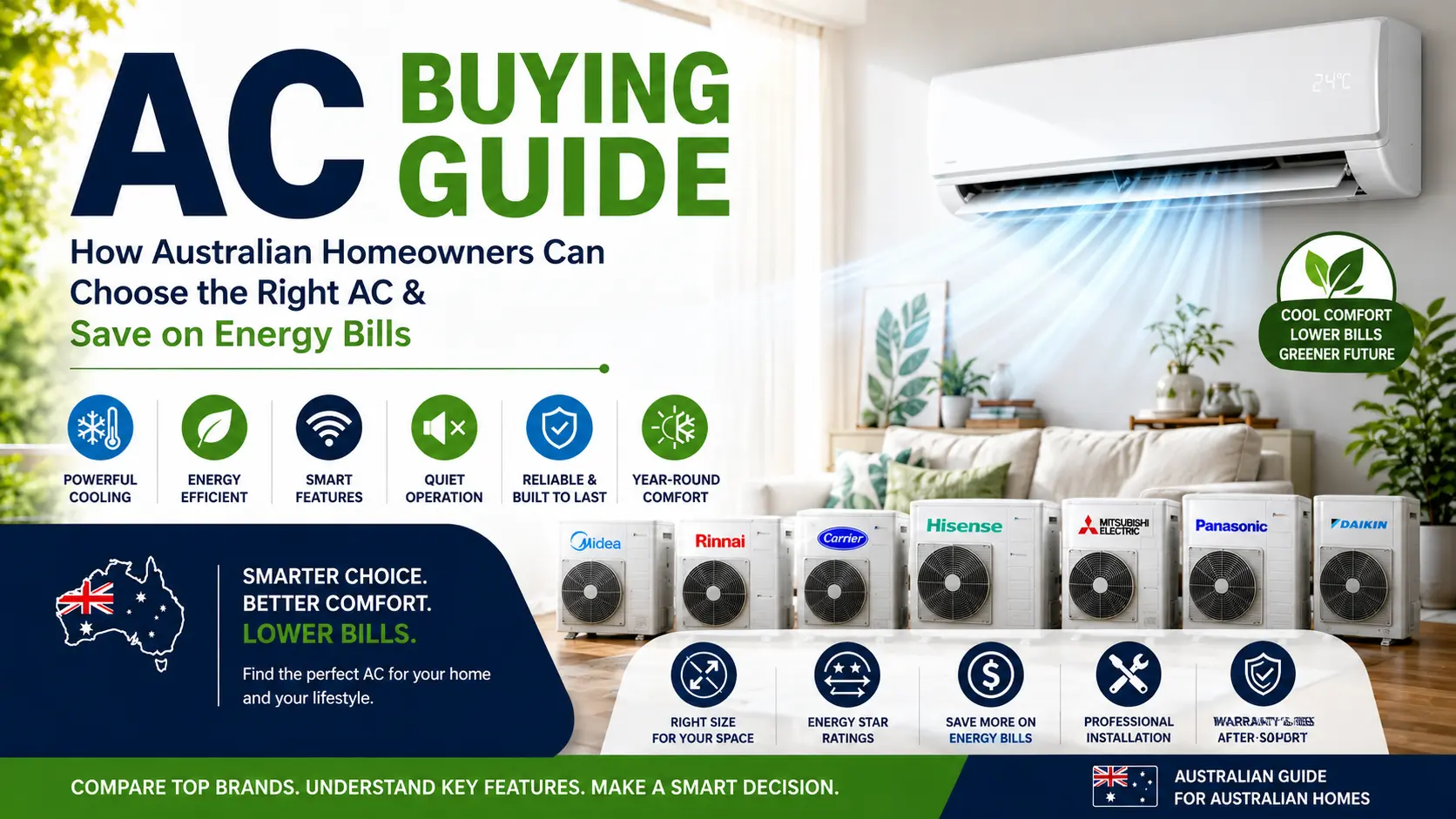
You can easily decide to buy the perfect brand for your house through this pictorial comparison between the top AC brands:
Common Mistakes to Avoid When Buying an Air Conditioner
- Choosing the cheapest AC without checking energy efficiency
- Buying the wrong cooling capacity for the room size
- Ignoring installation quality and airflow positioning
- Not checking warranty coverage and servicing support
- Overlooking electricity running costs
- Installing indoor units in poorly ventilated locations
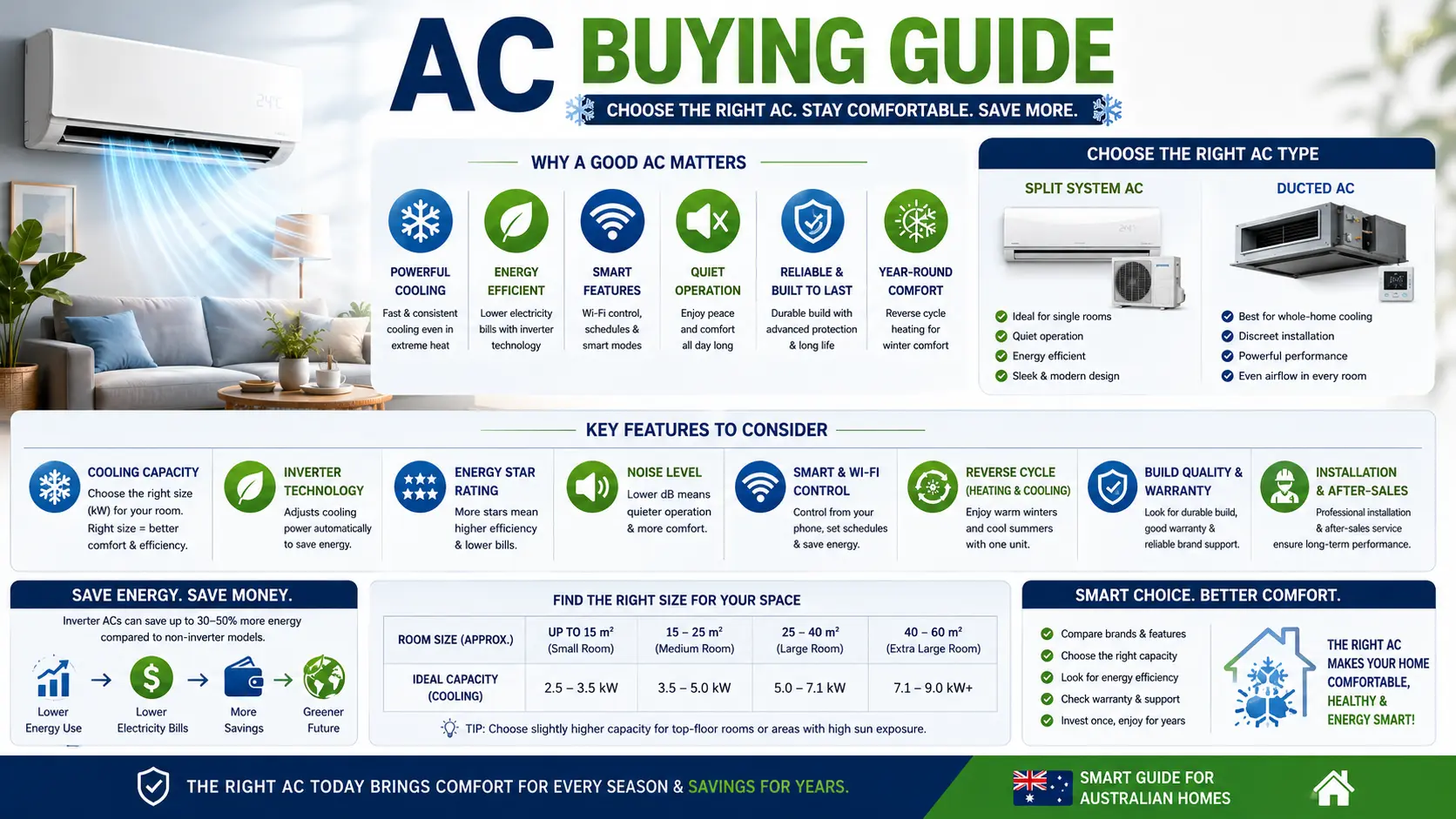
Definitely, in the unpredictable changes in weather, especially a country like Australia, where summer becomes harder to resist, you need to find a guide to buy the best AC for your house to keep your family healthy and happy.
Final Thoughts
This AC Buying Guide shows that modern air conditioners are no longer simply cooling devices — they are now an important part of energy-efficient and comfortable living in Australian homes. With inverter technology, smart controls and improved energy ratings, today’s AC systems can significantly reduce electricity consumption while providing better indoor comfort throughout the year.
Brands such as Midea, Rinnai, Carrier, Hisense, Mitsubishi Electric, Panasonic and Daikin all offer unique advantages depending on your budget, room size and feature preferences. Whether you prioritise affordability, advanced smart technology or premium long-term reliability, choosing the right air conditioner can improve both comfort and energy savings for many years.
Before making your final decision, always compare installation quality, warranty coverage, energy efficiency and long-term operating costs rather than focusing only on upfront pricing