


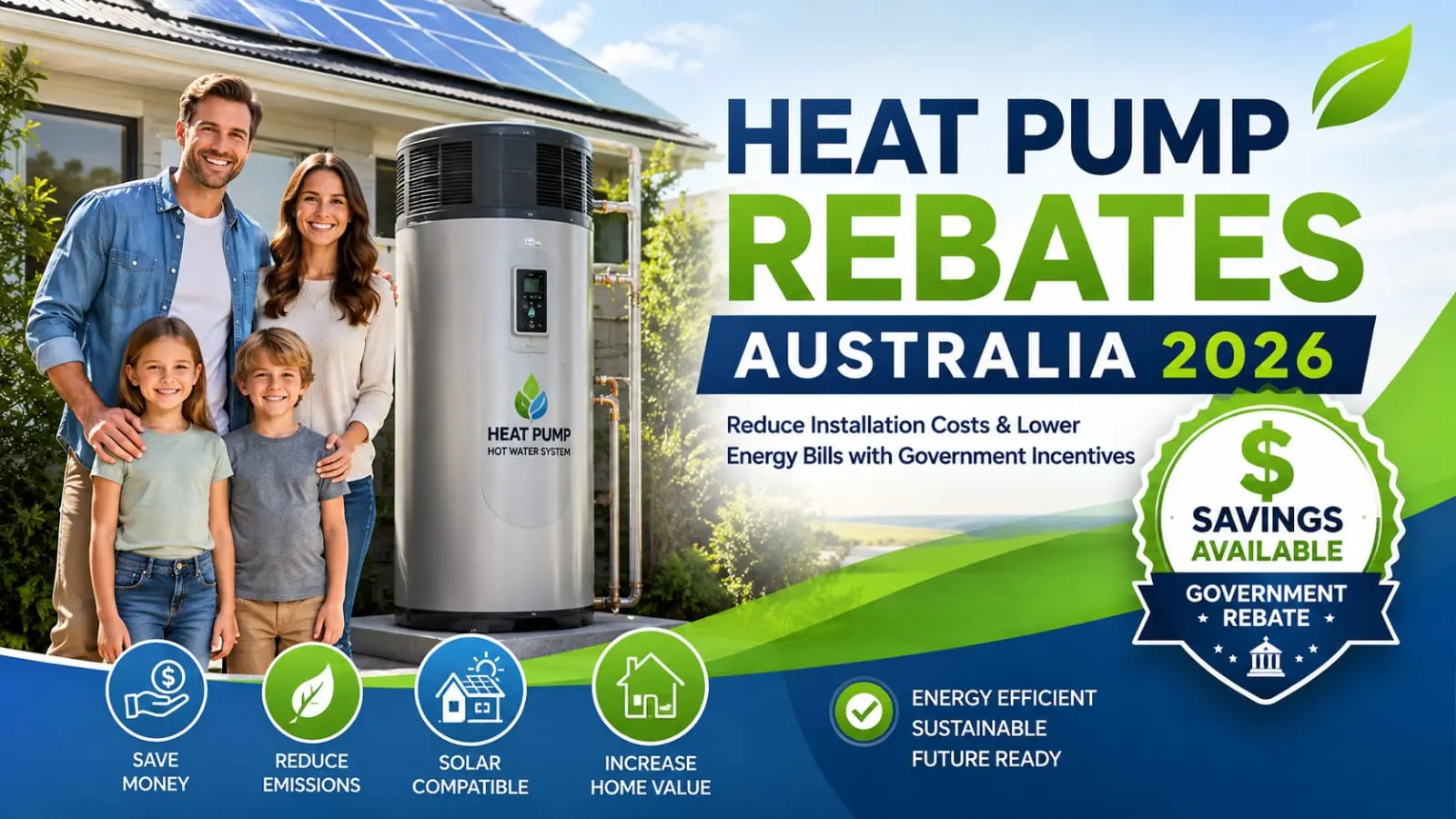
Heat Pump Rebate in Australia is a step to reduce the energy prices continuing to rise across the country. Homeowners are looking for practical ways to reduce household expenses without sacrificing comfort. One of the most effective solutions available today is upgrading to a heat pump hot water system. These systems use advanced technology to produce hot water using significantly less electricity than traditional electric water heaters, helping households save money while reducing their environmental impact.
To encourage the adoption of energy-efficient technologies, Australian governments offer a range of rebates, incentives, and certificate schemes that can substantially lower installation costs. Depending on your location and eligibility, these incentives can save you hundreds or even thousands of dollars. This guide explores everything Australian homeowners need to know about heat pump rebates, including available incentives, eligibility requirements, expected savings, and how to maximise your rebate benefits.
What Is a Heat Pump Hot Water Rebate?
A heat pump hot water rebate is a financial incentive designed to reduce the upfront cost of purchasing and installing an energy-efficient heat pump hot water system. These rebates are offered through federal government programs, state-based energy initiatives, and certificate schemes that encourage Australian households to transition away from less efficient electric or gas water heaters.
The objective behind these incentives is simple: reduce energy consumption, lower greenhouse gas emissions, and help Australians save money on their utility bills.
Unlike traditional electric water heaters that generate heat directly, heat pumps transfer heat from the surrounding air into the water storage tank. Because of this process, they require significantly less electricity and can deliver impressive long-term savings.
For many households, upgrading to a heat pump is one of the most cost-effective energy-efficiency improvements available.
Why Australian Governments Support Heat Pump Adoption
Hot water systems account for a considerable portion of household energy use in Australia. In many homes, water heating represents the second-largest energy expense after heating and cooling.
As Australia works toward emissions reduction targets and a cleaner energy future, governments have identified heat pump technology as a practical solution that delivers immediate benefits.
Heat pumps help:
- Reduce household electricity consumption.
- Lower greenhouse gas emissions.
- Improve energy efficiency across the residential sector.
- Reduce demand on the electricity infrastructure.
- Support the transition toward renewable energy.
Government incentives make these systems more affordable, encouraging more households to make the switch sooner rather than later. So, Heat Pump Rebates in Australia can be considered as a step to reduce the expenditures behind the energy consumption of households.
How Heat Pump Hot Water Systems Work
A heat pump hot water system operates similarly to a reverse-cycle air conditioner.
Instead of generating heat directly, the system extracts warmth from the surrounding air using a refrigerant cycle. This captured heat is then transferred into the water stored in the tank.
The process typically involves:
- Drawing ambient air into the system.
- Absorbing heat through a refrigerant.
- Compressing the refrigerant increases the temperature.
- Transferring heat into the water tank.
- Releasing cooled air back into the environment.
Because the system moves heat rather than creating it, it can use up to 75% less electricity than traditional electric storage water heaters.
This exceptional efficiency is one of the key reasons governments actively support heat pump installations through rebate programs.
Federal Heat Pump Rebates Through STCs
One of the most important incentives available nationwide is the Small-scale Renewable Energy Scheme (SRES). Under this scheme, eligible heat pump hot water systems can generate Small-scale Technology Certificates (STCs).
STCs represent the environmental benefits associated with installing renewable and energy-efficient technologies. These certificates have financial value and are generally traded within Australia’s renewable energy market.
For homeowners, the process is usually simple. Instead of managing the certificates themselves, most homeowners assign their STCs to an accredited installer in exchange for an immediate discount on the purchase price.
The value of STCs depends on several factors, including:
- System efficiency. • Geographic location. • Installation date. • Current market value of certificates.
Although the exact savings vary, STCs can significantly reduce the upfront cost of installing an eligible heat pump hot water system.
This federal incentive is available across Australia and forms the foundation of many heat pump rebate calculations.
Heat Pump Rebates by State
While the federal STC program is available nationwide, many Australian states and territories offer additional incentives that can further reduce the cost of upgrading to a heat pump hot water system. These programs are updated periodically, so homeowners should always verify current eligibility requirements before purchasing.
Victoria
Victoria continues to lead Australia in household energy-efficiency initiatives. Through programs such as Solar Victoria and Victorian Energy Upgrades (VEU), eligible homeowners may access substantial rebates and discounts when replacing inefficient hot water systems.
Depending on household circumstances and available funding, Victorian residents may receive rebates worth up to $1,400 for approved heat pump hot water systems.
The combination of federal STCs and Victorian incentives often makes Victoria one of the most attractive states for heat pump installations.
New South Wales
New South Wales offers incentives through the Energy Savings Scheme (ESS) and related household energy-efficiency programs.
Many accredited providers apply available discounts directly at the point of sale, reducing the amount homeowners pay upfront. Depending on the system being replaced and current program rules, households can receive meaningful discounts when switching to an approved heat pump system.
NSW continues to encourage households to move away from older electric and gas hot water systems in favour of more energy-efficient alternatives.
Queensland
Although Queensland does not currently provide a large statewide rebate equivalent to Victoria’s programs, residents can still access federal STC incentives.
In addition, some local councils, energy retailers, and installation companies periodically offer promotions and discounts that can reduce installation costs.
Queensland’s warm climate makes it particularly suitable for heat pump technology, allowing homeowners to maximise energy-efficiency benefits throughout the year.
South Australia
South Australia has long been recognised as a leader in renewable energy adoption. While specific rebate programs may change over time, homeowners can often benefit from certificate-based discounts and energy-efficiency initiatives that support heat pump installations.
Residents should consult accredited installers and government resources to identify available programs.
Western Australia
Western Australian homeowners primarily benefit from federal STC incentives. However, energy retailers and local sustainability programs may occasionally provide additional support for energy-efficient upgrades.
As electricity prices continue to rise, heat pumps are becoming an increasingly attractive option across WA.
Tasmania
Tasmania’s focus on clean energy and sustainability aligns well with heat pump technology. While incentive programs can vary, residents may still access federal STC benefits and other energy-efficiency initiatives.
Heat pumps perform efficiently in Tasmania’s climate and can provide substantial long-term savings for households.
Australian Capital Territory (ACT)
The ACT has consistently supported low-emission technologies through various sustainability initiatives. Homeowners should monitor current ACT government programs and energy-efficiency schemes for available incentives.
How Much Can You Save through a Heat Pump Rebate in Australia?
The exact savings from a heat pump hot water system depend on several factors, including:
- Household size
• Daily hot water usage
• Existing hot water system
• Local electricity prices
• Climate conditions
• Available rebates and incentives
For example, a household replacing an ageing electric storage water heater may receive:
- Federal STC discount
• State-based rebate (where available)
• Reduced electricity consumption
Many homeowners report annual hot water energy savings of several hundred dollars.
Over the lifespan of the system, these savings can add up to thousands of dollars, making heat pumps one of the most financially rewarding home energy upgrades available.
Example Scenario
Imagine a family of four replacing a conventional electric water heater with a modern heat pump system.
Potential benefits may include:
- Significant reduction in annual water-heating costs.
• Federal STC discount at installation.
• Additional state incentive (if eligible).
• Lower carbon footprint.
• Increased energy efficiency.
While actual figures vary, many households recover their investment much faster when rebates are applied.
Who Is Eligible for a heat pump rebate in Australia?
Eligibility requirements vary between programs, but most schemes require:
General Eligibility Checklist
✓ Installation of an approved heat pump hot water system
✓ Installation by a licensed or accredited installer
✓ Compliance with Australian standards
✓ Proof of property ownership or approval to install
✓ Replacement of an eligible existing hot water system (where required)
✓ Completion of required documentation
Some state programs may also include income thresholds, property value limits, or location-specific requirements.
Checking eligibility before purchasing is essential to avoid missing out on available incentives.
How to Claim a Heat Pump Rebate in Australia?
Although specific processes vary between programs, the rebate application process is usually straightforward.
Step 1: Research Available Incentives
Begin by identifying the rebates and discounts available in your state or territory.
Step 2: Choose an Approved System
Select a heat pump model that qualifies under the relevant rebate program.
Step 3: Obtain Quotes
Request quotes from accredited installers who are familiar with available incentive schemes.
Step 4: Confirm Eligibility to Get a Heat Pump Rebate in Australia
Ensure you meet all program requirements before committing to installation.
Step 5: Complete Installation
Have the system installed by a qualified professional.
Step 6: Submit Documentation
Some programs require forms, invoices, and proof of installation. Others apply rebates automatically through participating installers.
For many homeowners, the rebate is deducted directly from the purchase price, simplifying the entire process.
Additional Benefits Beyond Rebates
While government incentives make heat pump hot water systems more affordable, the long-term benefits often provide even greater value than the initial rebate itself.
Lower Electricity Bills
One of the biggest advantages of a heat pump is its exceptional energy efficiency. Since the system transfers heat rather than generating it directly, it uses significantly less electricity than conventional electric storage water heaters.
For many Australian households, this translates into noticeably lower energy bills year after year.
Reduced Carbon Emissions
As Australia moves towards a cleaner energy future, reducing household emissions has become increasingly important.
Heat pumps consume less electricity and produce fewer greenhouse gas emissions compared to traditional water heating methods. When paired with rooftop solar panels, they can further reduce a household’s environmental impact.
Excellent Solar Compatibility
Heat pump hot water systems work exceptionally well alongside solar power systems.
Many homeowners schedule water heating during daylight hours, allowing excess solar energy to heat water rather than exporting it back to the grid. This increases solar self-consumption and maximises the value of a rooftop solar investment.
Increased Property Appeal
Energy-efficient homes are becoming increasingly attractive to buyers and renters alike.
Installing a modern heat pump hot water system can enhance a property’s sustainability credentials and potentially improve its overall appeal in a competitive property market.
Long-Term Reliability
Modern heat pump systems are designed to provide years of reliable service. Many leading manufacturers offer extensive warranties and advanced technologies that help ensure consistent performance and energy savings.
Best Heat Pump Brands Commonly Eligible for Rebates
While rebate eligibility depends on approved product lists and program requirements, several well-known manufacturers frequently appear among Australia’s most popular heat pump brands. You really need to be informed about the best brands that are eligible for the Heat Pump Rebate in Australia.
Rheem is one of Australia’s most recognised hot water brands. Its heat pump range is known for reliability, strong warranty support, and suitability for Australian conditions.
Dux offers a variety of energy-efficient hot water solutions and remains a popular choice among Australian homeowners seeking rebate-eligible systems.
iStore heat pumps have gained popularity due to their energy efficiency, smart technology integration, and compatibility with solar energy systems.
Ecogenica specialises in heat pump technology and is widely recognised within Australia’s energy-efficiency market.
Emerald Energy focuses on sustainable hot water solutions designed to help households reduce both energy consumption and operating costs.
Before purchasing any system, homeowners should confirm that the chosen model is eligible under current rebate and incentive programs.
Frequently Asked Questions
Are heat pump rebates available across Australia?
Federal STC incentives are available nationwide. However, additional rebates and discounts vary depending on the state or territory and may change over time.
Can I combine federal and state rebates?
In many situations, yes. Homeowners may be able to combine federal STC benefits with state-based rebates and certificate schemes, subject to program rules and eligibility requirements.
How much can a heat pump reduce my energy bills?
Many households experience reductions of 60–75% in water-heating energy consumption when replacing older electric systems with modern heat pumps. Actual savings depend on household size, hot water usage, climate, and electricity prices.
Are heat pumps suitable for colder climates?
Yes. Modern heat pump systems are designed to operate efficiently across a wide range of Australian climates, including cooler regions such as Tasmania and parts of Victoria.
Do I need solar panels to install a heat pump?
No. Heat pumps operate independently of solar power systems. However, pairing a heat pump with rooftop solar can significantly increase household energy savings.
How long does a heat pump hot water system last?
Most quality heat pump systems are designed to last 10–15 years or more when properly installed and maintained.
Is a heat pump better than a traditional electric water heater?
In most situations, yes. Although heat pumps may have a higher upfront cost, their superior energy efficiency often results in significantly lower operating expenses over time.
Final Thoughts
As you have come through the entire article, I think now you have a clear concept of the Heat Pump Rebate in Australia.
Heat pump hot water rebates are helping thousands of Australian households make the transition to cleaner, more energy-efficient home energy solutions. By reducing the upfront cost of installation, government incentives make heat pumps accessible to more homeowners while supporting Australia’s broader sustainability goals.
Whether you are replacing an ageing electric water heater, reducing household energy bills, or improving the environmental performance of your home, a heat pump hot water system can be a worthwhile investment.
The combination of federal STC incentives, state-based rebate programs, and ongoing electricity savings creates a compelling financial case for upgrading. As rebate schemes and eligibility requirements can change, it is always advisable to consult official government resources and accredited installers before making a purchasing decision.
With the right system and available incentives, Australian homeowners can enjoy lower running costs, improved energy efficiency, and long-term savings for many years to come.